Service
Metal Roof Repair
Repair for metal roofing — loose or failed seams, fastener backouts, oil-canning, and rust or corrosion spots — handled by a crew that works on metal roofing regularly, not just asphalt shingle.
Metal roofs need far less maintenance than shingles over their lifespan, but when something does go wrong, it's usually a specific, identifiable failure point rather than the widespread wear you see on an aging shingle roof — which makes metal roof repair a different skill set than general roofing work.
Common Metal Roof Problems
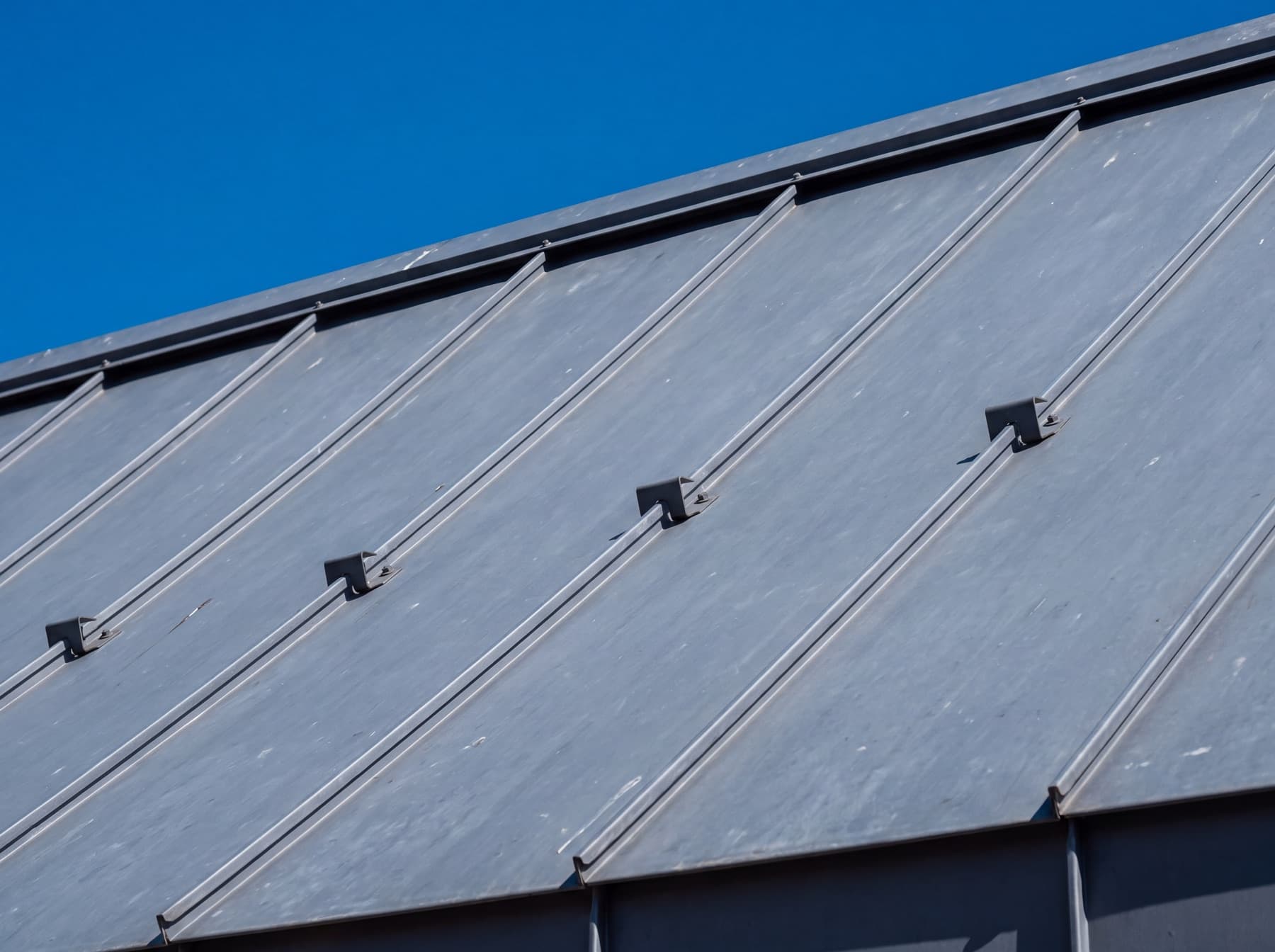
- Loose or failed seams. On standing seam roofs, the interlocking seams are what keep water out. If a seam wasn't crimped correctly during installation, or has worked loose over years of expansion and contraction, water can find its way in along the seam line.
- Fastener backout and gasket failure. Exposed-fastener panel systems rely on rubber washers under each screw. Those gaskets compress, crack, and shrink over time — usually starting around the 10 to 15 year mark — and every failed gasket is a potential leak point. This is the single most common repair on exposed-fastener metal roofs.
- Oil-canning. A wavy or rippled appearance in flat panel sections, usually cosmetic rather than a structural or leak issue, but sometimes a sign the panels weren't installed with enough allowance for thermal movement.
- Rust and corrosion. More common on older galvanized steel panels, at cut edges where the protective coating has been compromised, or wherever two dissimilar metals are in contact and causing galvanic corrosion. Caught early, affected panels can often be treated or replaced individually rather than requiring a full re-roof.
- Punctures and impact damage. Hail, fallen branches, or foot traffic from other trades (satellite installers, HVAC techs) can dent or puncture panels, especially on lighter-gauge material.
Key takeaway
Most metal roof leaks trace back to a seam or fastener issue, not a failure of the panel material itself. A crew that works on metal regularly will check seams and fasteners first — a shingle-focused roofer who doesn't usually work with metal may miss the actual source entirely.
What Metal Roof Repair Costs
Repairs to metal roofing typically run $5 to $10 per square foot, higher than standard asphalt shingle repair, reflecting both the material cost and the specialized labor involved — sourcing a matching panel profile and finish, working safely on a smooth metal surface, and correctly resealing seams or fasteners without introducing a new leak point in the process. An isolated fastener or seam repair on an otherwise sound roof is a modest job; a repair involving panel replacement or corrosion treatment across a larger section costs more, closer to what a comparable-sized shingle repair of similar scope would run.
Why It Matters Who You Hire
Metal roofing isn't installed or repaired the same way asphalt shingles are, and a repair done by someone unfamiliar with the material can introduce problems that weren't there before — an incorrectly resealed seam, a fastener pattern that doesn't account for thermal expansion, or a patch that looks fine but doesn't actually match the panel's expansion behavior over time. If your roof is metal, it's worth confirming your contractor actually works on metal regularly, not just occasionally.
Repair vs. Replace
Most metal roof problems are legitimately repairable — a failed seam, a handful of backed-out fasteners, or an isolated rust spot don't require replacing the whole roof, which is one of metal's real advantages over shingles. Replacement becomes the better conversation when corrosion has spread across multiple panels rather than staying isolated, when the underlying structure has been compromised by long-term water intrusion, or when the roof is old enough that matching panels for a clean repair isn't realistically possible anymore. A straightforward guideline: if repairs are addressing new, isolated problems, keep repairing. If the same areas keep failing or the damage keeps spreading despite repairs, that's usually a sign the roof itself — not just a spot on it — is reaching the end of its service life.
Maintenance That Prevents Repairs
A yearly visual check catches most metal roof problems while they're still small and cheap to fix — loose fasteners, early gasket wear, debris buildup in valleys, and the first signs of rust before it spreads. Keeping the roof clear of leaves and branches matters more than it does on shingles, since trapped debris holds moisture directly against the metal surface and accelerates corrosion at the contact point. For exposed-fastener systems specifically, budgeting for gasket replacement around the 10 to 15 year mark — before they fail, not after — is the single most effective way to avoid a leak from that cause entirely.
Where We Offer Metal Roof Repair
What Homeowners Look For
A few things customers consistently tell us matter most.
Frequently Asked Questions
Ready to get this fixed?
Call now or request a free estimate — we'll get back to you fast.