Service
Roof Repair
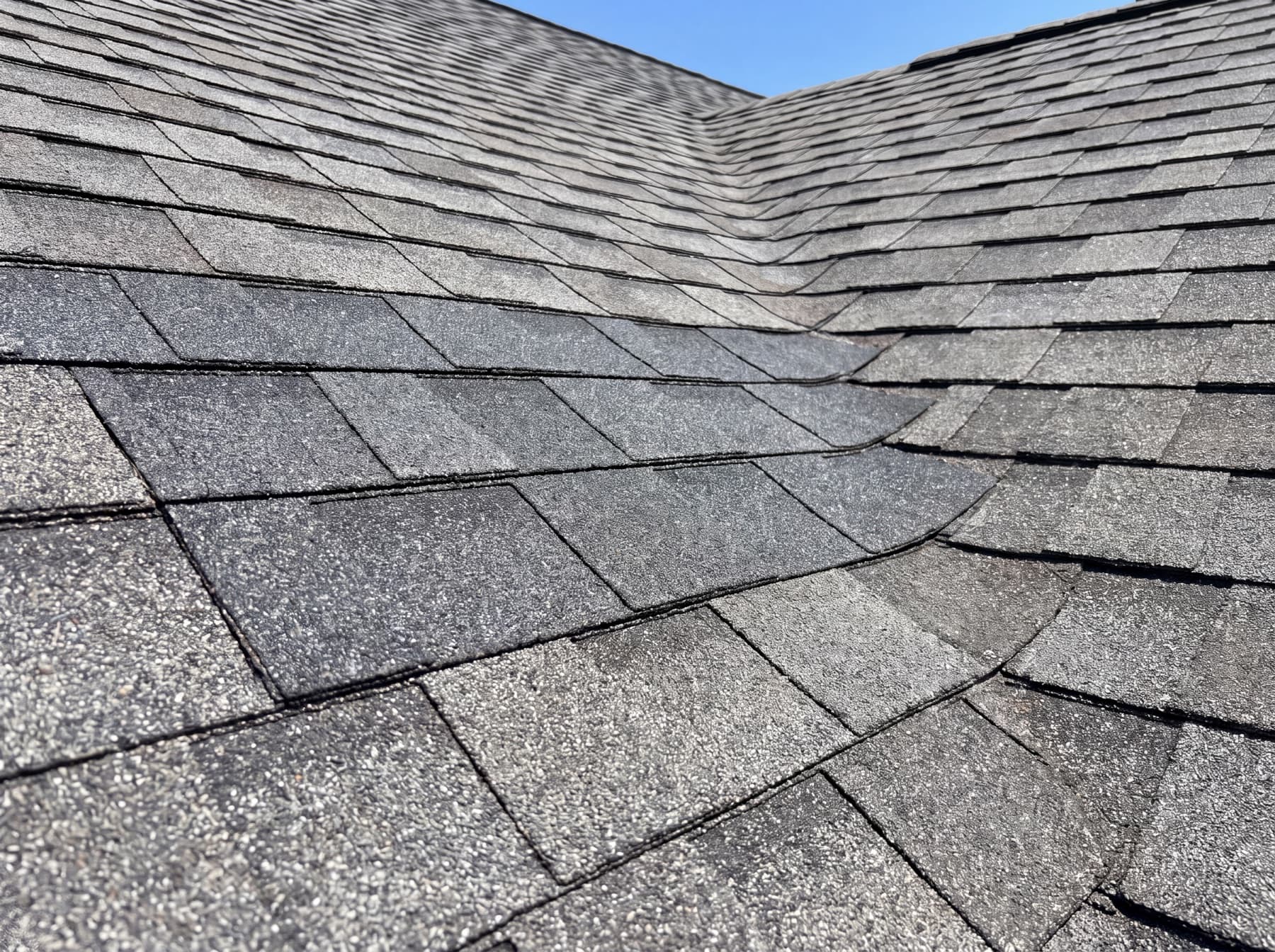
Fast, reliable roof repair for leaks, storm damage, missing or damaged shingles, and flashing failures — diagnosed on-site with a straight price before any work starts, not a guess based on a photo.
Most roof repairs aren't emergencies until they are. A handful of lifted shingles or a slow drip around a vent pipe is a $200 fix today and a $3,000 ceiling replacement in eighteen months if it sits. The hard part for most homeowners isn't deciding to call someone — it's knowing whether the number they're quoted is fair, and whether "repair" is even the right call versus a full tear-off.
What Roof Repair Actually Costs
Nationally, roof repairs run about $1,150 on average, but that single number hides a wide range depending on what's actually wrong:
- Minor repairs — a handful of replaced shingles, resealing a vent boot, patching a small area — typically run $150 to $1,000.
- Moderate repairs — multiple leak points, partial decking replacement, or flashing work around a chimney or skylight — land in the $1,000 to $3,000 range.
- Major repairs — structural sagging, extensive water damage, or a section of roof that needs to be opened up and rebuilt — can run $3,000 to $8,000 or more.
Per square foot, standard asphalt shingle repair runs roughly $3 to $7, with architectural shingles closer to $4 to $8 and metal or slate repairs running higher because of material and labor complexity. Labor is usually the bigger line item — figure 55–65% of the total bill — since most of the time on a repair job goes into safely accessing the area, removing the damaged section cleanly, and matching the surrounding material, not the materials themselves.
Key takeaway
A small, isolated repair should land under $1,000. If a quote comes in well above that for a single leak or a few damaged shingles, ask exactly what's being replaced and why — it may be a sign the damage is more extensive than it looks from the ground, or it may just be an inflated quote.
What Drives the Price Up or Down
A few things move the number more than homeowners expect:
- Roof pitch and access. A steep roof, a second story, or anything requiring extra fall-protection equipment adds labor time before a single shingle gets touched.
- How the damage was diagnosed. A repair quoted from a ground-level photo is a guess. A repair quoted after someone actually gets on the roof and checks the decking underneath is a real number — and it's why we don't quote sight-unseen.
- What's under the shingles. If the decking underneath a leak has rotted, that's an added repair, not an optional upsell. Skipping it just means the new shingles are nailed into soft wood, which fails again within a year or two.
- Material match. Repairing a 12-year-old roof with a discontinued shingle color means either a visible patch or a wider tear-off than the damage alone would require.
- Storm damage and insurance. If the damage traces back to a specific storm, homeowners insurance often covers repair costs above your deductible — but only if the damage gets documented before repairs start, not after.
Repair or Replace?
Not every roof problem needs a full replacement, and not every roof is worth continuing to patch. A reasonable rule: if a repair would cost more than about 30% of a full replacement, or if the roof is already past 75% of its expected lifespan with problems showing up in more than one spot, replacement is usually the better use of the money — you'll likely be back up there again within a couple of years otherwise. Below that threshold, a proper repair — done with matching materials and actual attention to what's underneath — is the right call and should hold for years, not months.
If you're not sure which category your roof falls into, that's exactly what a repair estimate should tell you before any work starts — not after.
What to Expect During a Repair Visit
A repair that's done right follows roughly the same sequence regardless of what's actually wrong:
- On-roof diagnosis. Someone gets up there and actually looks — not just at the visible damage, but at the surrounding area and the decking underneath, since a leak often extends further than the stain on your ceiling suggests.
- A written estimate before any work starts. You should know the price and scope in advance, not find out afterward. If the estimate changes once work is underway — say, rotted decking is discovered — that should be communicated and approved before proceeding, not billed as a surprise.
- The repair itself. Removal of the damaged material, inspection and repair of anything underneath that needs it, and installation of matching replacement material — shingles, flashing, or underlayment as needed.
- Cleanup. Old material and debris hauled away, gutters and yard checked for stray nails or granules. A repair crew that leaves a mess behind isn't finishing the job.
Most single-area repairs are done in a few hours. Anything involving decking replacement or multiple problem spots typically takes a full day.
DIY vs. Calling a Professional
A few things are reasonable to handle yourself: clearing debris off the roof, cleaning gutters, and a visual check from the ground after a storm. Actual repair work is a different story. Roof work carries real fall risk, and a repair that looks simple from the ground — resealing a vent boot, replacing a shingle — is easy to do incorrectly in a way that doesn't show up until the next heavy rain. A missed nail hole, a shingle installed with the wrong overlap, or sealant applied to a surface that wasn't properly prepped can all create a new leak instead of fixing the old one.
There's also a practical reason beyond safety and technique: most roofing warranties are voided by unlicensed repair work, including your own. If you're planning to make an insurance claim or you'll want warranty coverage intact for future issues, DIY repair on anything beyond basic maintenance can end up costing more than it saves.
Where We Offer Roof Repair
What Homeowners Look For
A few things customers consistently tell us matter most.
Frequently Asked Questions
Ready to get this fixed?
Call now or request a free estimate — we'll get back to you fast.